
Species Profile | Images | Breeding Report | Similar Species
back to the cyprinid index
How to look afterPuntius titteya
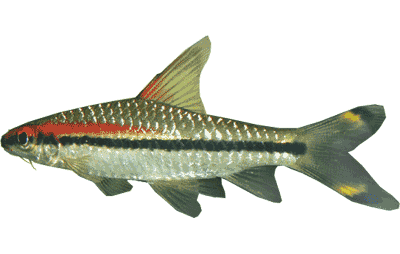
Cherry barb
Deraniyagala, 1929 
(Other members of the genus Puntius)
ADULT SIZE: 5 cm
WATER CONDITIONS: Not critical
TEMPERATURE RANGE: 23-27 C
FOOD: Feed Puntius titteya small live-foods and fine grade dried foods
DISTRIBUTION: This species comes from Sri Lanka
AQUARIUM CARE: The cherry barb naturally inhabits shaded rainforest streams in Sri Lanka, tending towards the lower strata. A well planted, and not too brightly lit tank will make these barbs at home. Males are much redder than females.
BREEDING: Soft water is preferable for the breeding tank. Fry should be raised separately, being fed newly hatched artemia nauplii at first, gradually moving on to other fine-grade live and dried foods.
Have you bred Puntius titteya? Why not fill in a breeding questionaire?, or examine existing Puntius titteya breeding reports

This male cherry barb demonstrates the intensity of colour of some males

Female cherry barbs do not have the bright colouration of the males, just a stripe… but they do still have red fins
BREEDING: Soft water is preferable for the breeding tank. Fry should be raised separately, being fed newly hatched artemia nauplii at first, gradually moving on to other fine-grade live and dried foods.
Have you bred Puntius titteya? Why not fill in a breeding questionaire?
|
This page summarises breeding reports provided by visitors to this site, along with some statistical analysis. Please feel free to contribute – whatever your experience! 1 breeder has filled in a breeding report, a summary of which is shown in the graphs below. You can read the full reports here. To add details of your experiences of Puntius titteya, why not fill in a Breeding and maintenance Report. |
|||||
|
|
|
||||
|
|
|
||||
|
|
|
||||
|
|
|
Remember, each record represents only one persons experience; if you had different results, or used different methods, please share your experiences
| Water conditions: Moderately soft and acidic | Water temperature: 28oC+ |
| Disposition: Somewhat aggresive on occasions | Community tank?: Yes, a good community fish |
| Spawning Method: Adult fish removed from tank | Breeding problems: Poor egg survival |
| Sex ratio: Almost all females | Breeding difficulty: Very easy |
| Sucess: Very sucessful | Years Experience: 5 |
| Other Comments: | |
| Date this record created: 10th February 2013 | Breeding date: 2008 |
| Breeder: | Location: |